

LEARNING OUT LOUD · POST ONE
A photo editor from Hempstead, a neighborhood Black families built for themselves, a shark movie, and a tribe that broke the law on purpose.
Dr. Tyra Àkànké Washington · Head of School, Roosevelt Children’s Academy · Creator of the B.E.S. Instructional Framework™
The love of learning should be contagious. It should be something a child catches from an adult who has it badly.
I learn through travel and through reading, and that learning enters the curriculum through writing. I come to this in the spirit of Bernice Robinson, Septima Clark and Esau Jenkins, who built the Citizenship Schools on Johns Island and taught grown people to read so they could register to vote. My goal is the one they handed down: to educate students to become engaged citizens committed to creating a just and equitable world. I hope you will join me.
This summer I went to Martha’s Vineyard to walk Oak Bluffs.
The Highlands
Oak Bluffs began as a Methodist camp meeting in 1835, and those famous candy-colored gingerbread cottages grew up around it. Black and Wampanoag families were there early — about thirty cottages by 1871, on a street called Wamsutta Avenue, at the periphery of the Campground.
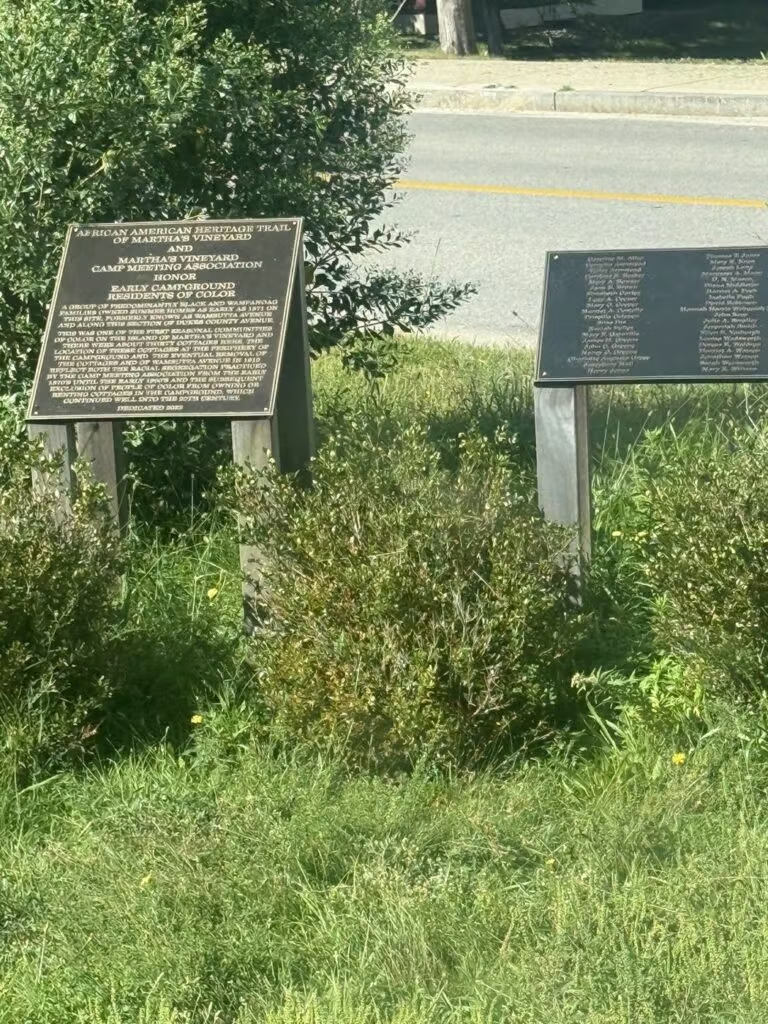
In 1910 those cottages and that avenue were removed. The plaque does not soften why: “the racial segregation practiced by the Camp Meeting Association from the early 1870s until the early 1930s and the subsequent exclusion of people of color from owning or renting cottages in the Campground, which continued well into the 20th century.”
So Black families bought somewhere else. They bought in the Highlands, and in the Oval — and that community is still there. Still Black-owned. Houses passed down through three and four generations. When other towns on the island would not rent a room to a Black traveler, Oak Bluffs was where you could own the house.
This is the part people miss. Oak Bluffs is not a story about Black people being shut out. It is a story about Black people being shut out, buying the next hill over, and building something that outlasted the people who shut them out.
The people who built it
Charles and Henrietta Shearer turned a laundry business into Shearer Cottage in 1912 — the first inn on the island to welcome Black guests, later listed in the Green Book. Charles was born on a Virginia plantation in 1854 to an enslaved mother and the man who owned her; he graduated from Hampton in 1880. Paul Robeson, Ethel Waters, Madam C.J. Walker and the composer Harry T. Burleigh all stayed there. It is still in the family, four generations on.
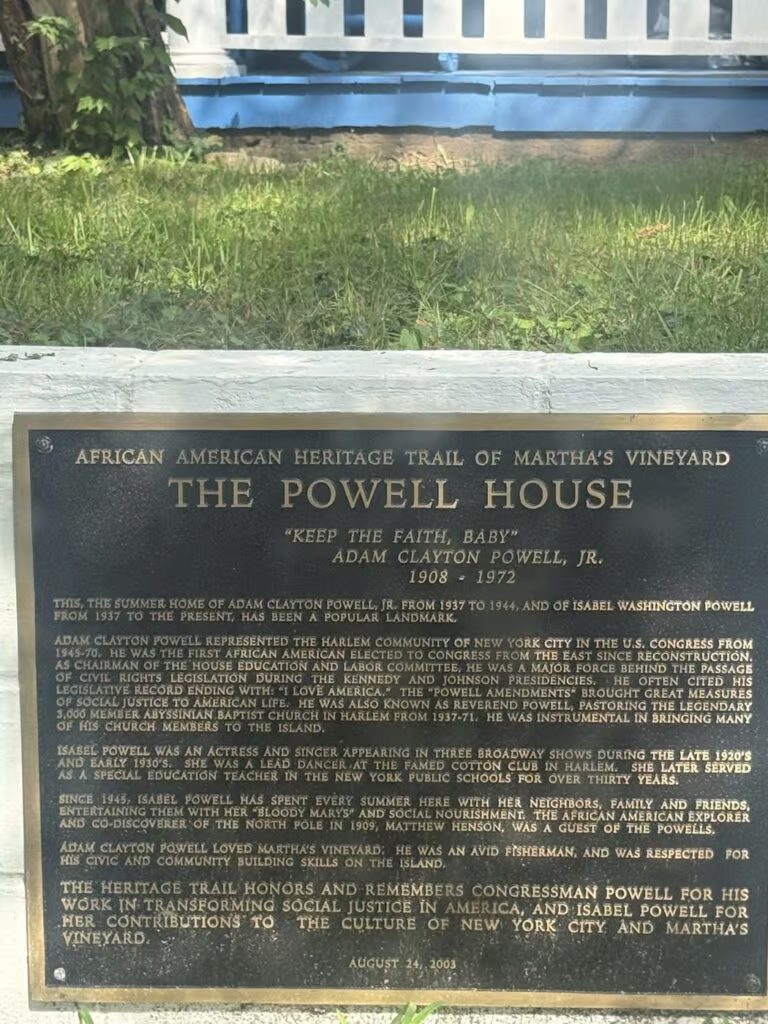
Adam Clayton Powell, Jr. summered here — the first African American elected to Congress from the East since Reconstruction, pastor of Abyssinian Baptist, the force behind the Powell Amendments. Isabel Washington Powell danced at the Cotton Club, appeared in three Broadway shows, then taught special education in the New York City public schools for over thirty years. Matthew Henson, who reached the North Pole in 1909, was their guest.
Emma Maitland Chambers, born 1895 — the first licensed woman boxer in New York State, who performed at the Moulin Rouge in Paris, played the lead in Shuffle Along and Blackbirds, and then became a physical instructor and a nurse.
“I can teach, sing, act, dance, box, wrestle or nurse. What would you prefer?”
Emma Maitland Chambers
And not everyone on the trail is famous, which is the point. Robert and Shirley Graves raised eight children in Springfield, then moved their machine and tool business to the island. They made wrought iron railings for island contractors, cut the keys for the jail, rebuilt the ring chute of the Flying Horses carousel, and built the Campground entrance arch. Read that last one again. They built the arch to a place their people had been excluded from.
“We can repair anything except a broken heart and the crack of dawn.”
Robert Graves, Jr. and Shirley Hinson Graves
The woman who chose the pictures
Then I walked into the Martha’s Vineyard Museum, and I want you to understand the glee — the actual glee — when I turned a corner and found an exhibition about Dolores Allen Littles.
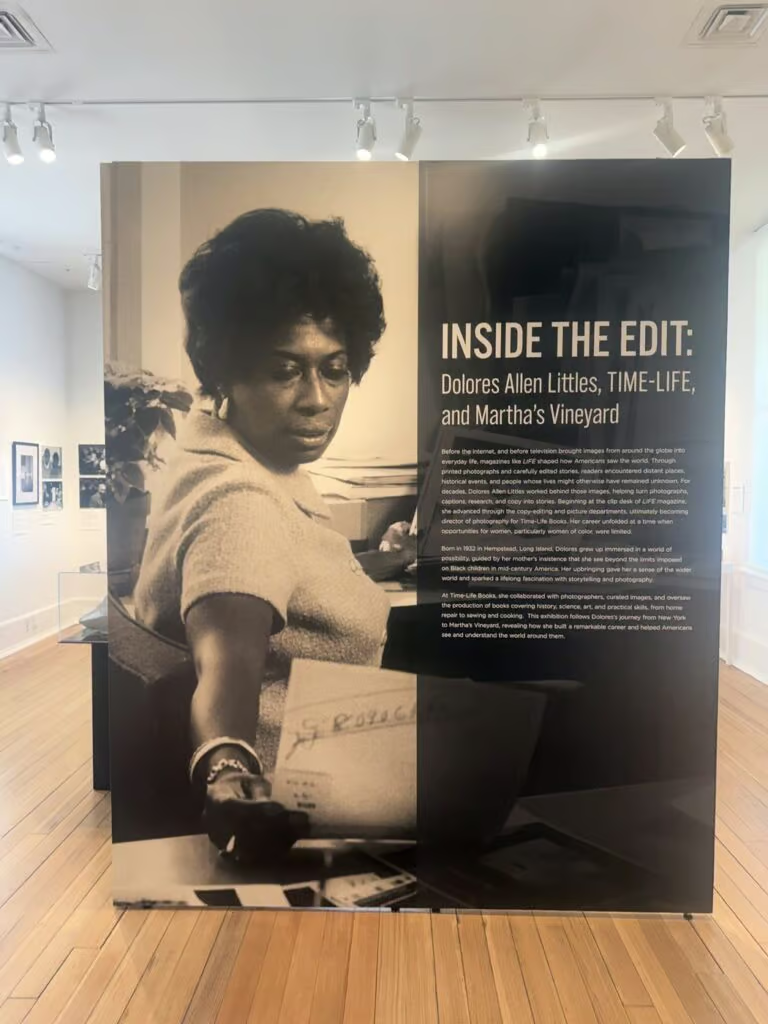
She began at the clip desk at LIFE magazine in 1954, the very bottom, cutting out articles, after applying more than once and being turned down. She went to college at night. She moved through copy-editing and the picture departments and rose to become Director of Photography for Time-Life Books.
LIFE was the Instagram of its time. Before television carried the world into every living room, those photographs were how Americans saw places and people they would never otherwise encounter. Somebody decided which ones ran.
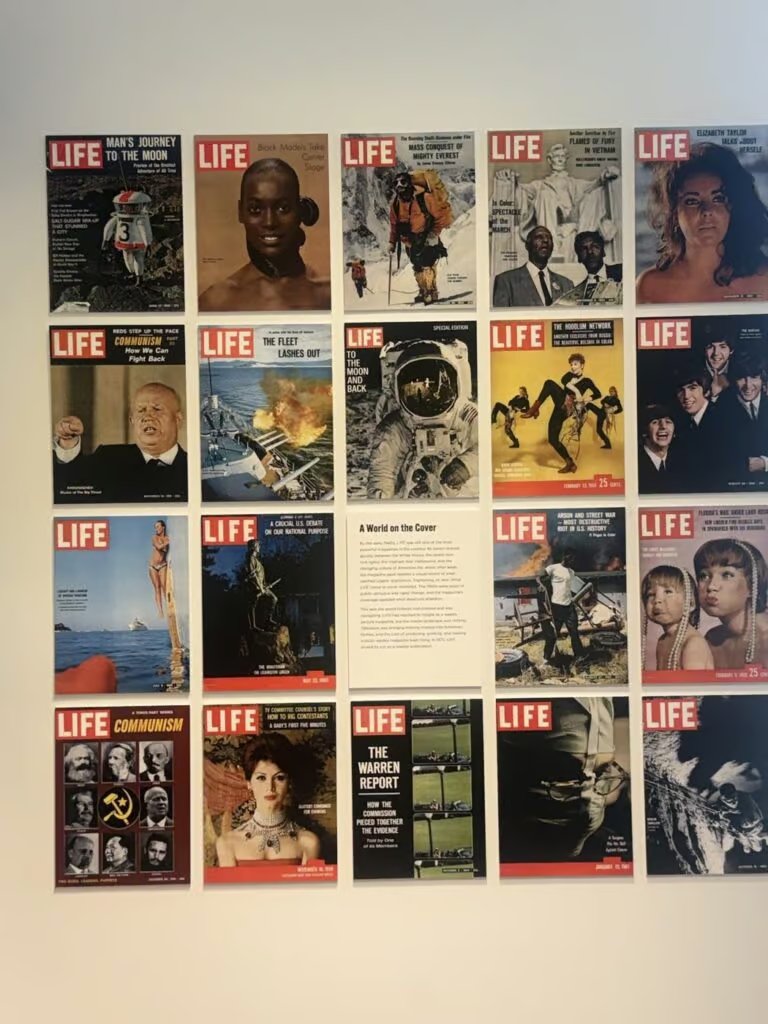
As an African-American woman, a native New Yorker born in Brooklyn and raised on Long Island, I swell with pride when I come across a successful Black woman from my own ground. Dolores Allen Littles was born in Hempstead in 1932 — a stone’s throw from my hometown of Roosevelt. Her mother insisted she see past the limits placed on Black children in mid-century America. In 1941, when Dolores was nine, that mother put her on a train alone to visit relatives in North Carolina.
My own family came from North Carolina to Brooklyn to Roosevelt. My grandparents bought their house in 1962. I went to an island to learn something new and found my own map on the wall.
She is in her nineties now, and she lives on the Vineyard.
A shark, and what discovery costs
I also visited the Jaws exhibit. The film turned fifty this year — the iconic suspense film that terrified America — and it was shot here, with island residents filling out the cast and crew. They helped make it a hit. It broadened the Vineyard’s exposure and raised its profile as a desirable vacation destination.
Which means it got expensive.
Sometimes discovery comes with a hefty price tag. A place draws attention, the attention causes prices to rise. The Highlands was built by mixed-class Black people — teachers, business owners, domestic workers, ministers. Some of those homes have stayed in the same families for generations, and are now income-generating properties through renting. But buying into this neighborhood is out of reach for working-class Black people.
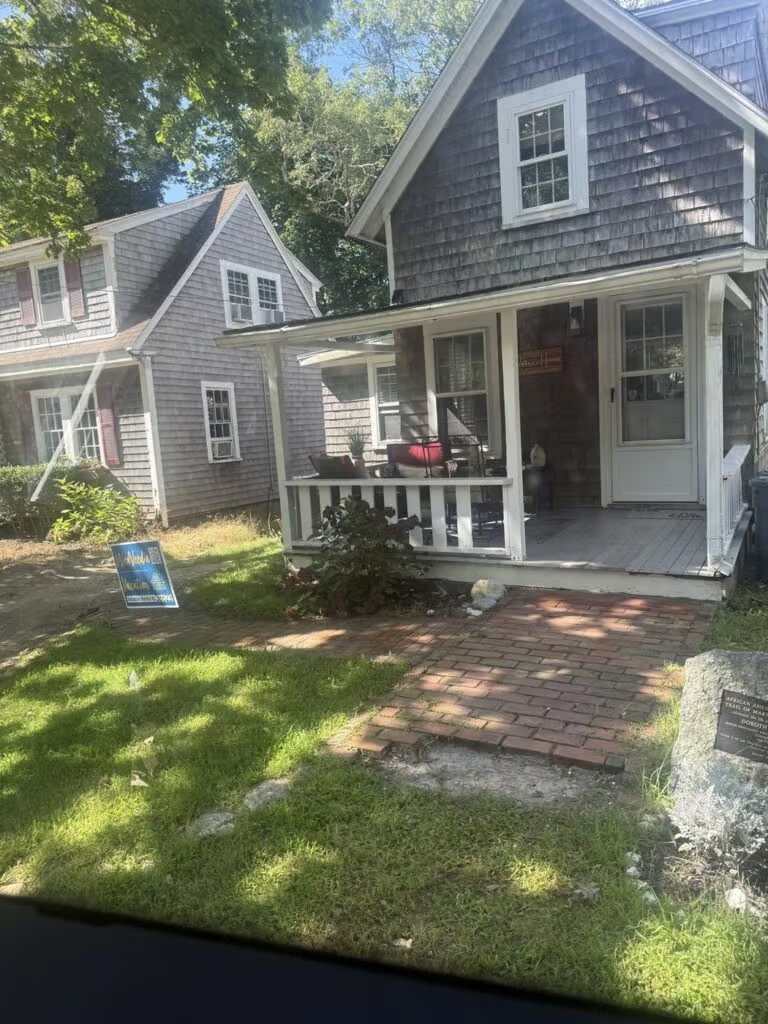
Her plaque reads: There is no life that does not contribute to history. Her house is a rental listing.
A belt, and a law worth breaking
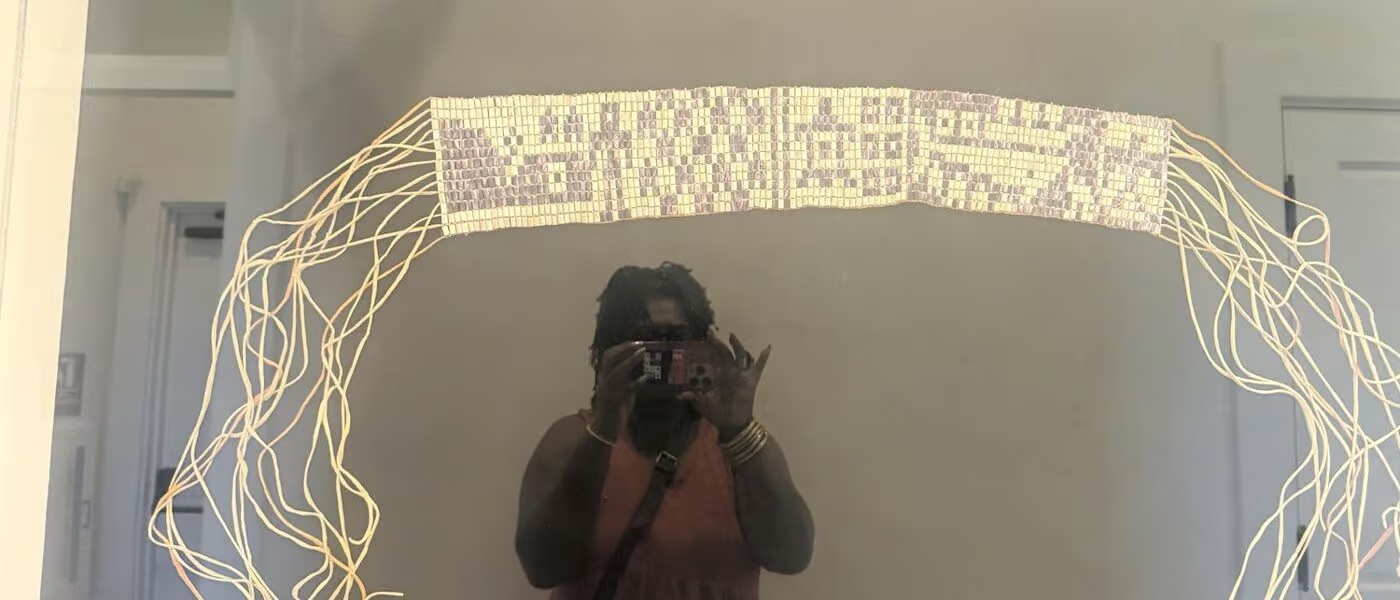
The last thing I learned about was the Island’s Indigenous people, the Wampanoag. Before it was Martha’s Vineyard it was Noepe. I saw a wampum belt in a case — the kind of record their people use to hold their history. Purple and white quahog beads, rows of them, long hide ties hanging down.
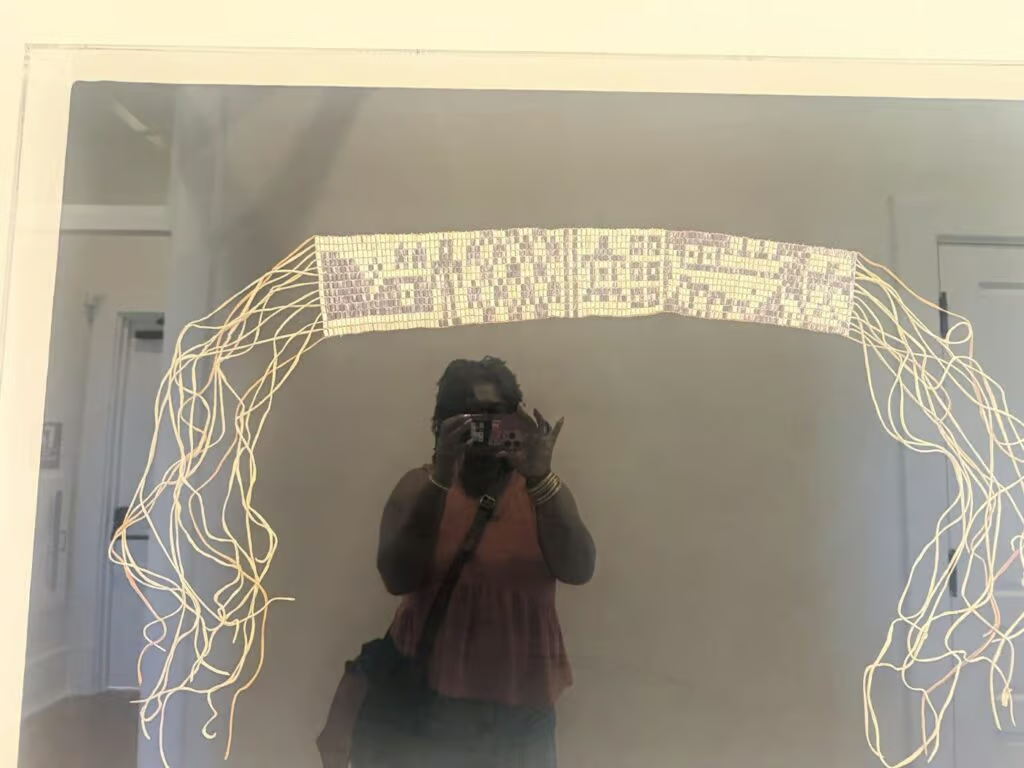
I am in that photograph because I could not get myself out of it. Then I decided I did not want to. I have spent two years writing a curriculum that asks children one question over and over: who made this record, and what did they choose to keep? And there I was, reflected in the glass of a case holding a record somebody else is keeping.
I also learned that Martha’s Vineyard was part of the Underground Railroad. The Wampanoag Tribe of Aquinnah sheltered people escaping slavery, disguised them, and helped them reach the maritime routes north — many by way of the abolitionist port of New Bedford, and on to Canada, including Nova Scotia.
“He had resolved when he ran away the second time that he would never be taken back alive, but instead would die fighting for his freedom.”
Netta Vanderhoop, 3 February 1921 — from the Heritage Trail plaque honoring the Wampanoag Tribe, which names Randall Burton and Edgar Jones
In 1850 the federal Fugitive Slave Act required that people running from slavery in the South be returned to the slaveholders. To help someone escape was a crime. The Wampanoag Tribe of Aquinnah disobeyed it. Not quietly, and not by accident. They provided refuge, knowing exactly what it cost.
Why any of this matters
You might be wondering how this helps my overall mission of building engaged citizens working to create a just and equitable society. Here is how I think of it.
If our children learn that there have always been oppressive institutions, and that there have always been people who worked against them, they will grow up knowing they have the power to choose.
We can teach them to identify inequity. Once they recognize it, as engaged citizens, they can work to improve it. That is a road to a just and equitable society. They can choose that path. They have seen people choose. They have seen people take risks to bring a just and equitable society about.
And I believe that showing children how people carve out lives steeped in joy is inspirational, and gives them hope. The Wampanoag women who hid a man and dressed him for his escape. The Shearers turning a laundry into an inn. Emma Maitland, who could teach, sing, act, dance, box, wrestle or nurse — what would you prefer? Isabel Powell making Bloody Marys for her neighbors every summer for sixty years. Robert and Shirley Graves, who could repair anything except a broken heart and the crack of dawn. These are not only stories of survival. They are stories of people who built good lives on purpose.
Go visit the Martha’s Vineyard Museum and the African American Heritage Trail of Martha’s Vineyard online and see what they have built. And when it is warmer, take the trip if you can — there is a seasonal ferry that runs direct from Manhattan to the Vineyard.
Go somewhere. Bring it back. That is the whole method.
I hope you will join me on this learning journey toward a better world.
Sources and thanks. The African American Heritage Trail of Martha’s Vineyard, founded by Elaine Cawley Weintraub and Carrie Tankard · Martha’s Vineyard Museum, Inside the Edit: Dolores Allen Littles, Time-Life, and Martha’s Vineyard · Vineyard Gazette · Martha’s Vineyard Times · Martha’s Vineyard Magazine. All photographs by the author.
© 2026 Dr. Tyra Àkànké Washington · B.E.S. Instructional Framework™